Graphic organizers are one of my favorite teaching tools for reading because they help students organize their thinking and strengthen reading comprehension. With so many types of graphic organizers available, it’s easy to find the right one for any reading skill. Whether you’re teaching story structure, character traits, nonfiction, or vocabulary, reading graphic organizers make complex concepts easier for students to understand and apply.
Over my 28+ years of teaching, while using countless graphic organizers with my students, I learned the importance of using the right graphic organizer for your teaching/learning goal. In this guide, you’ll discover the different types of reading graphic organizers, when to use them, and how they can support your reading instruction throughout the school year.
What Are Graphic Organizers?
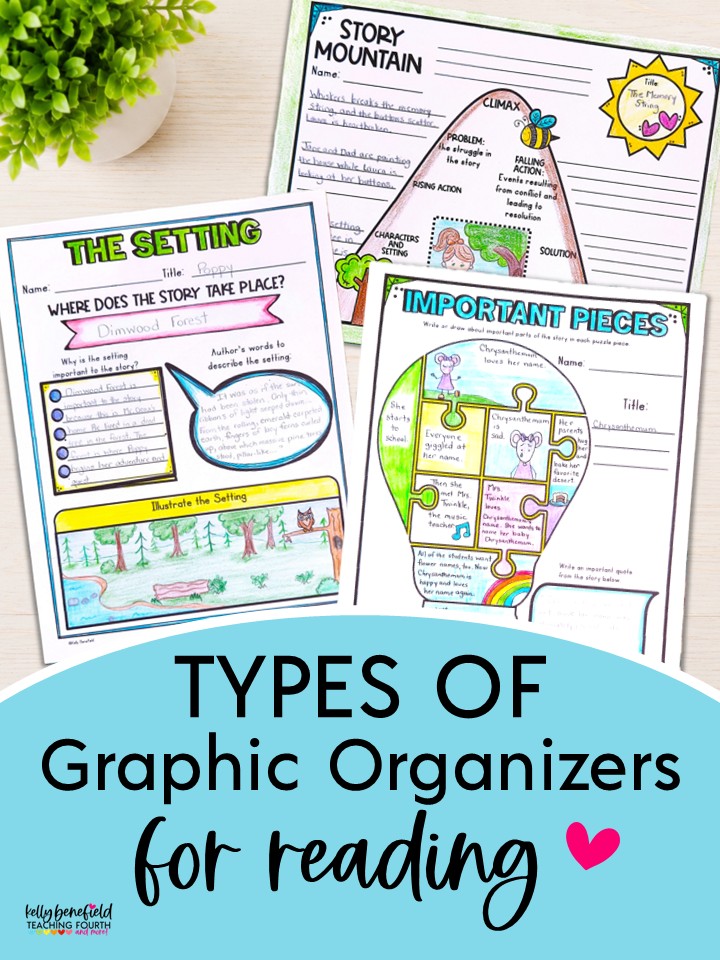
Graphic organizers are more than just a worksheet. They are visual tools that help students organize information and make sense of what they read. I love them because they help students simplify complex ideas, encourage critical thinking, and help them identify relationships between concepts.
Graphic organizers can be used to teach so many different reading skills, including story structure, character analysis, main idea, theme, nonfiction text structures, vocabulary, and more.
Why Use Graphic Organizers?
Graphic organizers support reading comprehension by helping students organize their thinking before, during, and after reading. They provide a clear structure for analyzing texts, discussing ideas, and responding to reading in meaningful ways.
Teachers use graphic organizers to:
- Improve reading comprehension.
- Encourage critical thinking.
- Help students organize information.
- Support classroom discussions.
- Differentiate instruction.
- Assess student understanding.
Choosing the Right Types of Graphic Organizers for Any Skill
Deciding which graphic organizer to use is not complicated. The best choice depends on the reading skill you’re teaching. Use the guide below to quickly match your lesson objective with a graphic organizer that supports student learning.
| If you’re teaching… | Try these graphic organizers |
| Story Structure | Story Maps, Plot Mountain, Beginning, Middle, End Charts |
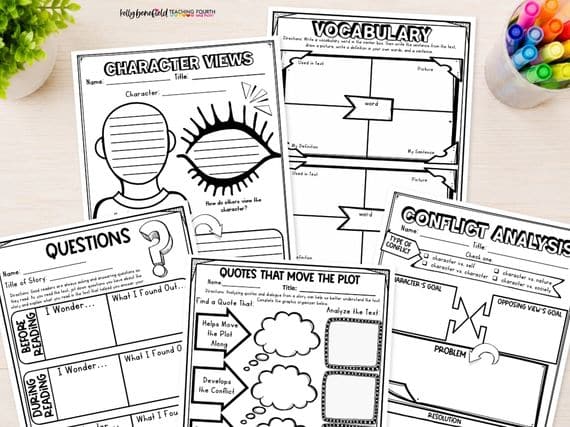
| Character Study | Character Maps, Character Traits Charts, Character Change Organizers |
| Reading Comprehension | Main Idea Webs, Theme Organizers, Inference Charts, Summary Organizers |
| Nonfiction | Text Structure Charts, Cause and Effect Organizers, Compare and Contrast Charts, Sequence Organizers |
| Voabulary | Vocabulary Maps, Frayer Models, Context Clues Organizers, Root Word Charts |
Let’s dive in and take a closer look at each of these reading skills and how graphic organizers can support your reading instruction.
Story Structure Graphic Organizers
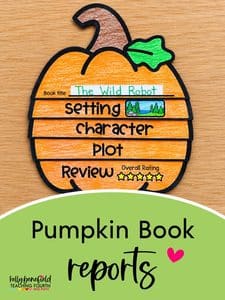
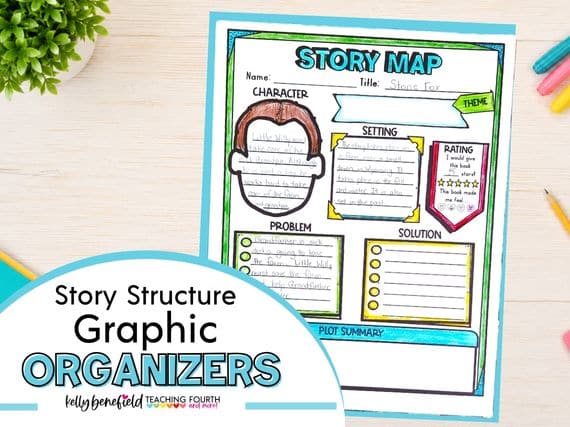
Story structure graphic organizers help students understand how the parts of a story work together. By organizing characters, setting, problem, events, and solution, students gain a clearer understanding of story structure and improve reading comprehension.
Why Use Them?
Story structure graphic organizers help students:
- Identify the key parts of a story.
- Retell events in the correct sequence.
- Understand how events connect.
- Support answers with text evidence.
- Prepare for discussions and writing activities.
Common Story Structure Graphic Organizers
Some of the most popular story structure organizers include:
- Story Maps
- Story Elements Charts
- Plot Mountains
- Beginning, Middle, and End Organizers
- Story Sequence ChartsStory Summary Organizers
Character Study Graphic Organizers
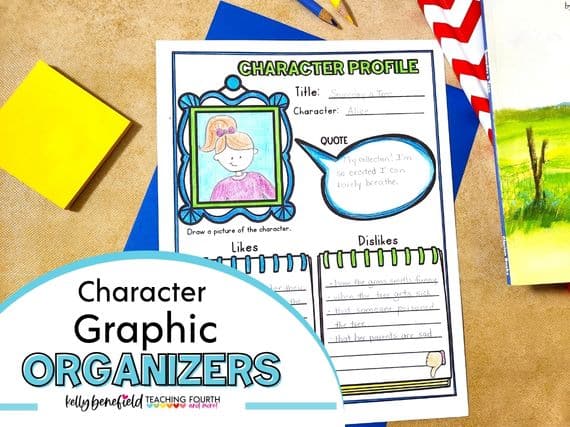
Character study graphic organizers help students analyze characters beyond their physical appearance. They encourage students to think about character traits, motivations, relationships, and how characters change throughout a story.
Why Use Them?
Character study graphic organizers help students:
- Identify character traits using text evidence.
- Compare and contrast characters.
- Analyze character growth.
- Understand point of view.
- Explain their thinking with evidence.
Common Character Study Graphic Organizers
- Character Maps
- Character Trait Charts
- Character Comparison Charts
- Character Change Organizers
- Point of View Graphic Organizers
Reading Comprehension Graphic Organizers
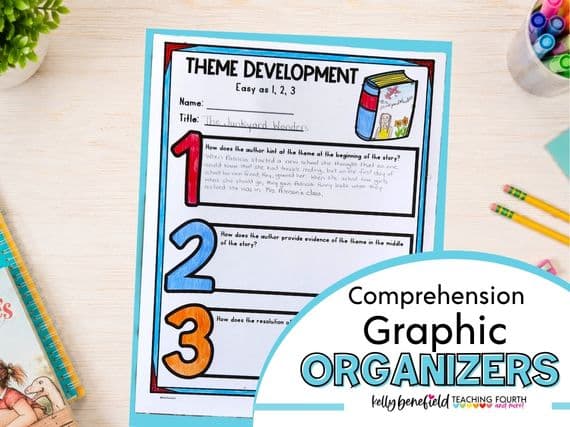
Reading comprehension graphic organizers help students organize their thinking and better understand what they read. They support higher-level thinking by encouraging students to analyze, summarize, and make connections.
Why Use Them?
Reading comprehension graphic organizers help students:
- Identify the main idea and supporting details.
- Make inferences using text evidence.
- Determine the theme.
- Summarize important information.
- Compare and contrast ideas.
Common Reading Comprehension Graphic Organizers
Some popular reading comprehension organizers include:
- Main Idea Webs
- Theme Graphic Organizers
- Inference Charts
- Summary Organizers
- Compare and Contrast Charts
- Cause and Effect Organizers
Graphic organizers can be especially helpful when students are learning to see the connection between the main idea and important details. Here are 7 simple strategies for teaching main idea that you can use along with your graphic organizers
Nonfiction Graphic Organizers
Another type of graphic organizer that is very useful in the reading classroom is the Venn diagram. This graphic organizer is used to compare and contrast 2 or more groups or things. A Venn diagram is created with two large overlapping circles. Similarities between the concepts are written in the section where the circles overlap. The differences are written where the circles do not overlap.
Venn diagrams can be used to increase understanding of relationships between two or more concepts or ideas.
Why Use Them?
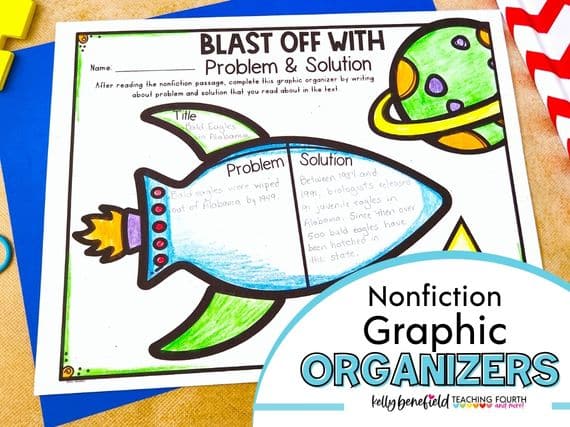
Nonfiction graphic organizers help students:
- Organize facts and details.
- Identify nonfiction text structures.
- Analyze cause and effect.
- Compare information.
- Prepare for informational writing.
Common Nonfiction Graphic Organizers
Some of the most effective nonfiction organizers include:
- Text Structure Charts
- Main Idea Organizers
- Cause and Effect Organizers
- Compare and Contrast Charts
- Sequence Organizers
- Text Feature Organizers
Vocabulary Graphic Organizers
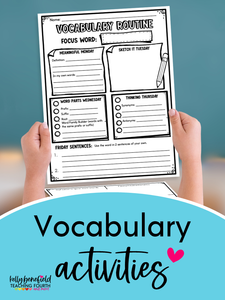
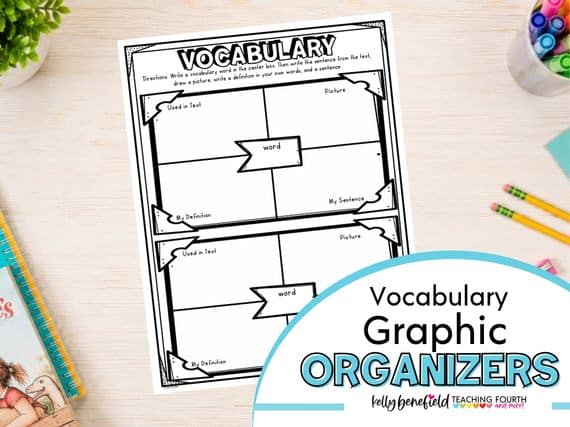
Vocabulary graphic organizers help students build word knowledge while strengthening reading comprehension. They encourage students to explore word meanings, relationships, and how vocabulary is used in context.
Why Use Them?
Vocabulary graphic organizers help students:
- Learn and remember new words.
- Build a deeper understanding of word meanings.
- Develop vocabulary through context.
- Recognize word relationships.
- Apply new vocabulary in reading and writing.
Common Vocabulary Graphic Organizers
Some different types of vocabulary graphic organizers include:
- Vocabulary Maps
- Frayer Models
- Context Clue Organizers
- Synonym and Antonym Charts
- Root Word Organizers
- Shades of Meaning Charts
Tips for Using Graphic Organizers
Graphic organizers are flexible tools that can be used with almost any reading lesson. Whether you’re introducing a new skill, practicing comprehension strategies, or assessing student understanding, choosing the right organizer can help students organize their thinking and engage more deeply with the text.
Best Practices
- Match the organizer to the reading skill.
- Model how to use the organizer first. (This is one of the most overlooked tips that will help your students be successful with graphic organizers.)
- Encourage students to use text evidence.
- Use organizers during whole-group, small-group, or independent reading.
- Reuse familiar organizers throughout the year. (Graphic organizers are not one-and-done. Use them over and over with different books, different read-aloud, independent reading, etc.)
When Should I Use Graphic Organizers?
Before Reading
- Activate prior knowledge.
- Preview vocabulary or text features.
- Make predictions.
During Reading
- Record important details.
- Track characters or events.
- Monitor comprehension.
- Collect evidence from the text.
After Reading
- Summarize the text.
- Respond to comprehension questions.
- Prepare for discussions or writing activities.
- Review and assess understanding.
Final Thoughts
Graphic organizers are powerful tools for helping students organize their thinking and strengthen reading comprehension. By choosing the right organizer for the reading skill you’re teaching, you can support deeper understanding and build confident, independent readers.
They are wonderful tools that can be used in a wide variety of ways: whole group instruction, literacy centers, partner work, book clubs, independent reading, with read-alouds, informal assessment, and so much more.
Whether you’re teaching story structure, character study, nonfiction, or vocabulary, having a variety of graphic organizers on hand makes it easy to engage students and reinforce essential reading skills throughout the year.
Looking for ready-to-use graphic organizers? Explore my collection of print-and-go reading graphic organizers that has helped tens of thousands of upper elementary teachers save valuable planning time while helping their students succeed as readers.
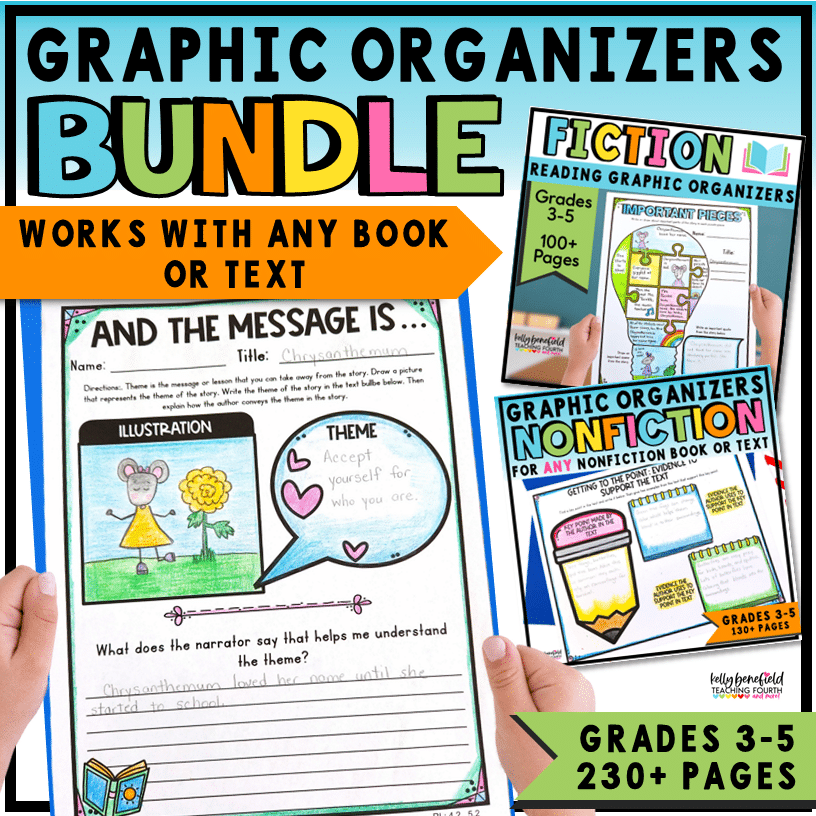
For even more information and ideas about graphic organizers, check out my blog post on Why Love Reading Graphic Organizers.