Teaching character development in upper elementary helps students grow as readers, enhances their comprehension skills, and helps students feel more connected to the story. When students notice a character’s growth, they’re not just decoding words on the page—they’re experiencing the story in a way that feels personal and meaningful. As they learn to look for and recognize important aspects of character development, this builds critical thinking and inferencing skills, which help them improve as readers.
Teaching Character Development in Upper Elementary to Build Comprehension
Helping students move beyond surface-level reading may seem like a daunting task, but teaching character development can strengthen key comprehension skills. When students dig into how a character grows, this requires them to connect details, infer meaning, and think about the why behind the character’s choices. As they analyze character growth, students naturally practice summarizing events, uncovering the theme, and engaging in deeper critical thinking. This makes character study a powerful tool for helping upper elementary students become thoughtful, independent readers.
Making Inferences
When students notice how a character reacts to challenges, they are practicing the skill of making inferences—reading between the lines to understand what the author doesn’t say outright. Character growth often requires making inferences since it is often implied and not stated in the story. Teaching character development in upper elementary helps students learn to read between the lines by examining dialogue, action, and feelings to understand the character’s changes. This sharpens inferencing skills.
Theme
Theme is another important reading skill for upper elementary, and for students to grasp theme, they must be able to recognize character development. Character growth also provides clues to the theme of a story, since it is often the character’s development that reveals the story’s theme. Learning to track development helps students uncover the author’s message more easily.
Summarizing
Students who understand the development of a character are better able to summarize a story. Because they can pinpoint how a character developed and identify the most important events that led to that change, they are better able to summarize with clarity and accuracy. Tracking a character’s development makes it easier for students to summarize, because they can focus on the most important events that shaped the character along the way.
Encourages Critical Thinking
As students learn to track the journey of a character, this encourages critical thinking. When students ask questions such as, Why did the character change? Was the change positive or negative? How did other characters influence them? higher-order comprehension skills are being used. Teaching character development in upper elementary is a great way to foster these critical thinking skills.
Teaching Character Development in Upper Elementary for Enjoyment
To be honest, teaching character and character development is one of my favorite skills to teach in reading. I find it enjoyable for several reasons. First, I love the engaging discussions that can be sparked from talking about characters. As students learn more about character development, their discussions about characters become more in-depth. It is exciting as a teacher to see your students grow and develop as readers and thinkers. These more in-depth discussions can extend to book clubs and literature circles, and can help make these more enjoyable for the students.
When students notice subtle changes in a character, they feel like skilled readers. That sense of achievement builds confidence, which leads to more enjoyment.
How to Teach Character Development in Upper Elementary

Use Graphic Organizers
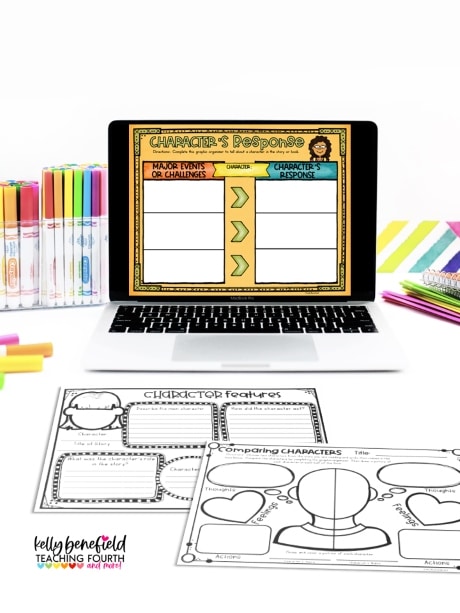
Character study graphic organizers are an excellent tool to help students take an in-depth study of character. Students can track character development in their reading. They can analyze character traits. Students can plot a character’s actions and decisions that change over the course of a story.
Graphic organizers give a visual structure for noticing growth and connecting it back to the plot and theme. My Character Graphic Organizers include graphic organizers that are perfect for students to track character development. These graphic organizers help students look for the character’s response to problems and events in the story, changes or growth of a character through the story, and more.
Read Alouds
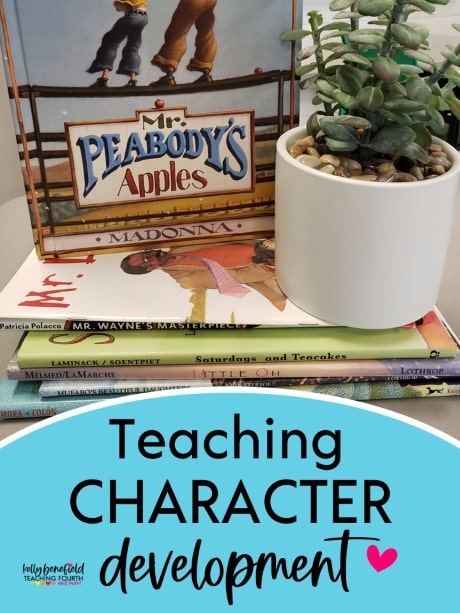
Upper elementary students are never too old for picture book read-alouds, and read-alouds are an excellent tool for teaching character development. Many excellent examples can be used, but two of my favorites include Chrysanthemum by Kevin Henkes, and The Memory String by Eve Bunting. I like to use Chrysanthemum to introduce character development because I usually read this at the beginning of the school year. Students are already familiar with this story. The Memory String has many talking points for character development and can create excellent discussions.
Read-alouds provide an excellent opportunity for you to model your thinking about character development. This modeling can help students expand their thinking skills and sharpen their abilities to search for clues to character development.
Teaching character development in upper elementary isn’t just another reading lesson—it’s a way to help students connect more deeply with stories, strengthen their comprehension, and grow as thoughtful readers. When students understand how and why a character changes, they begin to see the bigger picture of the text, from plot to theme to life lessons. Whether you use engaging read-alouds, small-group discussions, or structured graphic organizers, focusing on character development equips your students with strategies they’ll carry into every book they read. It’s a skill that not only improves test scores, but also makes reading more meaningful and enjoyable.
If you’re looking for ready-to-use tools to make teaching character development in upper elementary easier in your classroom, my Character Graphic Organizers are a great place to start. They give students a clear, engaging way to track character growth while building stronger comprehension skills.